With S&P 500 Index Funds at the forefront, this paragraph opens a window to an amazing start and intrigue, inviting readers to embark on a storytelling filled with unexpected twists and insights. S&P 500 Index Funds offer a unique opportunity for investors to tap into the growth potential of the market. By closely tracking the S&P 500 index, these funds provide a reliable way to diversify your portfolio and potentially achieve long-term financial goals.
Let’s delve deeper into the world of S&P 500 Index Funds and uncover the key benefits they offer.
Introduction to S&P 500 Index Funds
S&P 500 Index Funds are investment funds that aim to replicate the performance of the S&P 500 index, which is a market-capitalization-weighted index of 500 of the largest publicly traded companies in the United States.
How S&P 500 Index Funds Track Performance
These funds track the performance of the S&P 500 index by holding a portfolio of stocks that mirrors the index’s composition. They aim to match the returns of the index by investing in the same companies and in the same proportions as the index.
Benefits of Investing in S&P 500 Index Funds
- Diversification: Investing in S&P 500 Index Funds provides diversification across a wide range of companies and sectors, reducing risk compared to investing in individual stocks.
- Low Costs: S&P 500 Index Funds typically have lower expense ratios compared to actively managed funds, making them a cost-effective investment option.
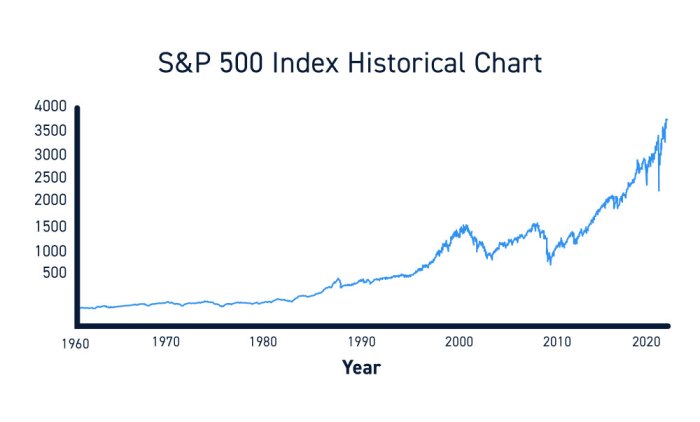
- Historical Performance: The S&P 500 index has historically delivered strong long-term returns, and by investing in S&P 500 Index Funds, investors can participate in this potential growth.
- Passive Investing: S&P 500 Index Funds are passively managed, meaning they have lower turnover and trading costs compared to actively managed funds, which can lead to higher net returns for investors.
Income Funds vs. Index Funds
When it comes to investing, it’s important to understand the differences between income funds and index funds. Income funds are designed to provide regular income payments to investors, typically through dividends or interest payments. On the other hand, index funds aim to track a specific market index, such as the S&P 500, and provide investors with returns that mirror the performance of that index.
Income Funds
Income funds focus on generating income for investors through dividends from stocks, interest from bonds, or a combination of both. These funds are popular among investors who are looking for a steady stream of income to supplement their portfolios. Examples of income funds include Vanguard High Dividend Yield Index Fund and PIMCO Income Fund.
Index Funds
Index funds, like the popular S&P 500 Index Fund, aim to replicate the performance of a specific market index. These funds invest in the same securities that make up the index they are tracking, providing investors with broad market exposure at a low cost. Index funds are known for their passive management style and are a popular choice for investors looking to diversify their portfolios.
Generating Income
Income funds generate income for investors primarily through dividends and interest payments. These funds are actively managed, with fund managers making decisions on which securities to invest in based on their income-generating potential. On the other hand, index funds do not focus on generating income specifically. Instead, they aim to replicate the performance of the index they track, with any income generated from dividends being reinvested back into the fund to track the index more closely.
Inflation Hedge with S&P 500 Index Funds
Investors often turn to S&P 500 Index Funds as a way to hedge against inflation due to their potential to outperform the rate of inflation over the long term. This is primarily because the S&P 500 Index consists of 500 of the largest publicly traded companies in the U.S., diversified across various sectors of the economy.
Relationship between Inflation and Index Funds
Index funds like the S&P 500 tend to perform well during periods of inflation for several reasons. Firstly, as inflation rises, so do the revenues and profits of companies within the index, leading to potential growth in stock prices. Additionally, companies within the S&P 500 often have the ability to pass on increased costs to consumers, which can help maintain their profitability despite inflationary pressures.
- Index funds provide exposure to a wide range of sectors, allowing investors to benefit from the growth potential of various industries that may perform well during inflationary periods.
- The diversification offered by index funds helps reduce the risk of individual company failures impacting the overall performance of the investment.
- Historically, the S&P 500 has shown the ability to outpace inflation over the long term, making it an attractive option for investors looking to preserve their purchasing power.
Insurance Premiums and S&P 500 Index Funds
Insurance premiums can have a significant impact on the performance of S&P 500 Index Funds. These premiums are the amount of money that individuals or businesses pay to an insurance company in exchange for coverage against specific risks. Fluctuations in insurance premiums can affect the overall returns of index funds, as they represent an additional cost that investors need to consider.
Impact of Insurance Premiums
Insurance premiums can directly reduce the net returns that investors receive from their S&P 500 Index Funds. As these premiums increase, investors may see a decrease in their overall profits. Additionally, high insurance premiums can eat into the gains generated by the index funds, making it crucial for investors to monitor these costs closely.
- Increased insurance premiums can lower the overall returns on investment.
- Higher premiums can erode the gains made through index fund investments.
- Monitoring insurance costs is essential to optimize investment performance.
Strategies for Investors
When faced with fluctuating insurance premiums, investors can consider several strategies to mitigate the impact on their S&P 500 Index Funds. Diversification of investments, regular review of insurance policies, and seeking competitive quotes from different insurers are some ways investors can navigate through changing premium costs.
Diversifying investments across various asset classes can help offset losses from high insurance premiums.
- Regularly reviewing insurance policies can ensure that investors are not overpaying for coverage.
- Seeking competitive quotes from different insurers can help investors find cost-effective insurance options.
- Adjusting investment strategies based on changing premium costs can optimize returns.
In conclusion, S&P 500 Index Funds stand out as a smart investment choice for those looking to grow their wealth steadily over time. With their ability to track the market performance and serve as a hedge against inflation, these funds offer a compelling option for investors. By understanding the ins and outs of S&P 500 Index Funds, you can make informed decisions to optimize your investment strategy and secure your financial future.
Helpful Answers
How do S&P 500 Index Funds differ from traditional mutual funds?
S&P 500 Index Funds specifically track the performance of the S&P 500 index, while traditional mutual funds are actively managed by fund managers who aim to beat the market.
Can S&P 500 Index Funds protect against inflation?
Yes, S&P 500 Index Funds can act as an inflation hedge due to their exposure to a diversified range of companies that can perform well even in inflationary environments.
Are S&P 500 Index Funds affected by changes in insurance premiums?
Insurance premiums can indirectly impact the performance of S&P 500 Index Funds, especially if they lead to broader economic shifts that affect the market.